If vegetable scraps are piling up beside the sink, the first question isn’t which compost bin has the most features. It’s where you can keep a manageable pile and how much time you want to spend maintaining it. For a small yard, a simple bin may be more useful than a gadget that is awkward to empty.
Match the bin to the yard
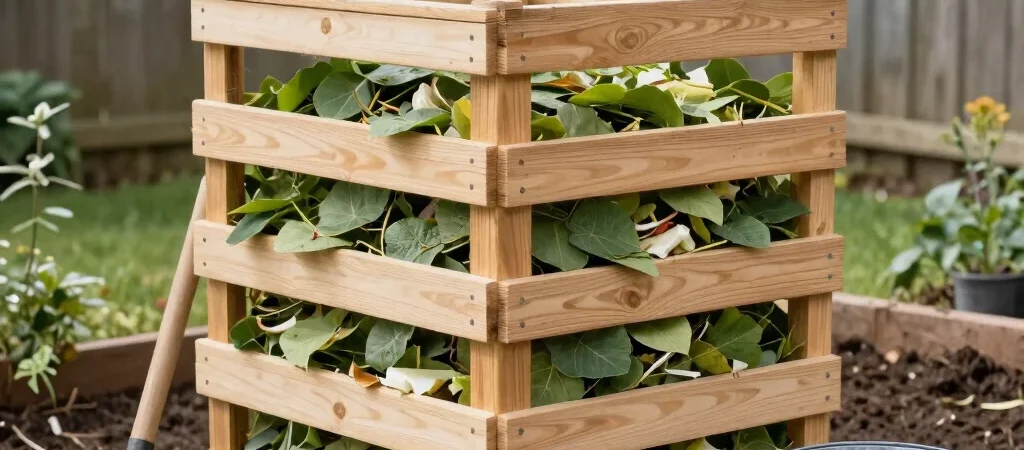
An open-sided bin made from sturdy, untreated materials can be inexpensive and easy to access with a garden fork. It needs enough room for you to turn or move the material, and a cover can help manage excess rain while still allowing airflow. Check any reclaimed wood for coatings or treatment before using it around compost.
A lidded container can suit a tighter space, while a tumbler may be easier to rotate than a pile with a fork. Those conveniences come with trade-offs: enclosed systems have limited capacity, and tumblers still need room to load and unload. Before buying or building, mark out the footprint and make sure you can reach the opening without moving other yard equipment.
Keep the mix manageable
Add a balance of moist, nitrogen-rich scraps such as vegetable trimmings and drier carbon-rich material such as dead leaves or shredded plain cardboard. Chop bulky pieces smaller when convenient, and add dry material if the pile becomes wet or smells unpleasant. Avoid adding meat, dairy, and oily leftovers to a simple backyard pile, where they can attract pests.
You don’t need to buy a thermometer or a bundle of composting accessories to begin. A fork, a covered spot for saved dry leaves, and a habit of checking moisture are a practical starting point. Choose the simplest bin you can maintain consistently; the best setup is the one that keeps scraps contained and gives you usable compost in time.