
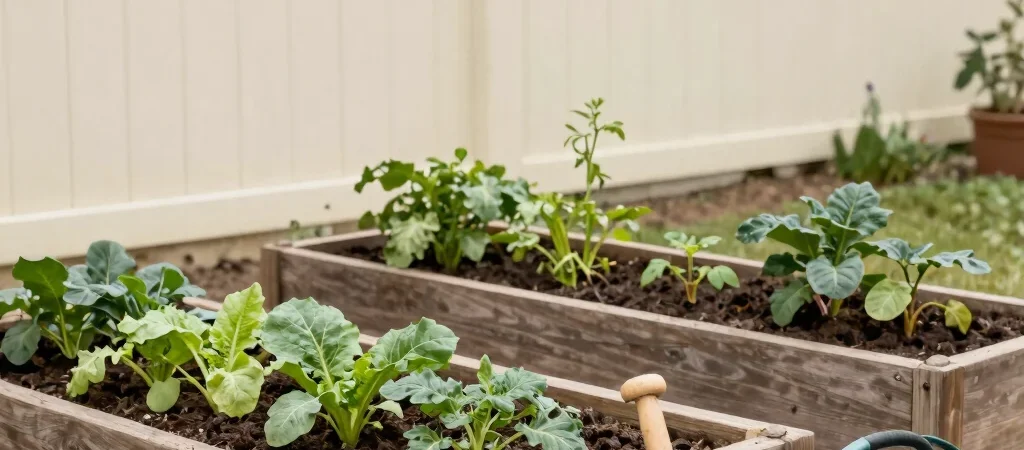
It’s easy to stand in a garden center with a cart full of seed trays, specialty soil, and tools before you’ve decided what will grow in your yard. Put the cart aside for a minute. A sunny patch, a few containers, and a short list of vegetables you actually eat are enough to make a useful first season.
Begin with the growing space
Watch your chosen spot over a typical day and note where direct sun reaches it. Fruiting crops such as tomatoes and peppers generally need more sun than leafy greens, so match the plants to the light rather than trying to change the whole yard. If you’re working with a patio or rental space, containers can make a modest start without building permanent beds.
Before buying lumber for raised beds, check whether the ground is workable and whether a simple in-ground row would do. A hand trowel, a sturdy watering can or hose, and a way to mark rows may cover the basics you’re missing. Borrow or reuse what you can; buy a specialized tool only after a real task shows you why it would help.
Choose a short crop list
Pick a few vegetables that fit your meals and your growing conditions instead of sowing every packet that catches your eye. Radishes and many lettuces can be direct-sown, while warm-season crops such as tomatoes are often started as transplants. Follow the seed packet for planting depth and timing, since local frost dates and weather shape the calendar.
Keep the first layout simple enough to water and weed in a few minutes. Leave room to reach each row, label what you plant, and keep a basic note of what sprouted and what you harvested. Those observations will tell you what to repeat next season—and what supplies you can skip.


